Wrecker Island
Secret InvasionWrecker Island is both the site of a costly Sligger extermination and the place where investigators found the Nazi submarine associated with the creatures’ origins. The mission destroyed the island’s Sliggers and eggs and removed the toxic contamination, restoring the ecosystem, but its local success did not prevent a much wider crisis from emerging along the coast.
Setting and the Submarine
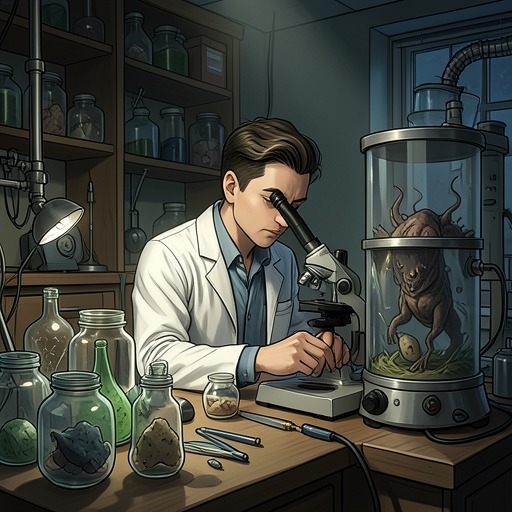
The island is described as lying off the coast, with the wreck of the Wrecker Island Nazi U-boat found beneath it. Residue from the submarine was collected for testing, while the toxic material that had leaked from it into the ocean was identified as the environmental hazard that the cleanup needed to address. The book does not establish a definitive laboratory identification for the substance in the evidence presented: Denise’s tissue analysis had yielded no conclusive answer about what the creatures were, and she was still awaiting results from the residue samples.
The proposed origin is therefore an investigation rather than a settled finding. Denise suspected that the submarine’s residue would reveal a substance designed by German and Japanese scientists to induce genetic mutation. Her theory was that generations of marine animals had consumed contaminated material and then other species, acquiring traits from their prey. Ron considered this plausible in light of Nazi-era interest in genetics and biological warfare, but the evidence stops short of confirming the compound’s composition or the complete chain of mutation.
The Extermination Mission
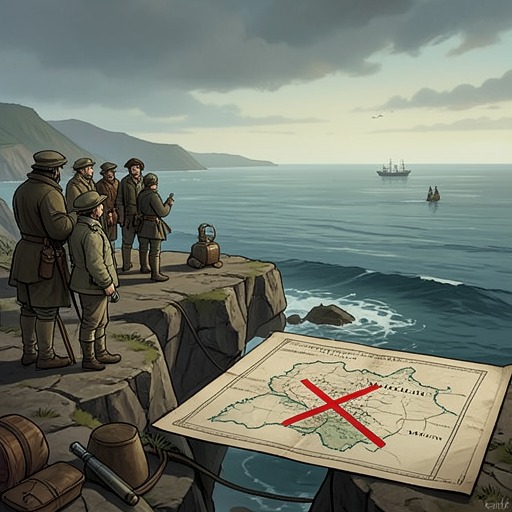
The island became the focus of a major operation after the earlier sheriff’s call for help had been dismissed by Captain Josh Moody as a hoax. Believing he had a responsibility to make amends, Josh returned with fourteen troopers from the South Carolina State Patrol to help eradicate the creatures. The operation succeeded, but ten of those troopers were killed in the battle, making the victory inseparable from its human cost.
The cleanup was part of the mission’s success, not an afterthought. The Sliggers and their eggs were destroyed, their carcasses were properly disposed of, and the EPA cleaned up the toxic element that had leaked from the submarine. Together, these actions were intended to eliminate both the immediate threat and the contaminated conditions that could sustain further ecological harm. After Mason Parker returned from the mission, Sweetboro’s residents were relieved and grateful that the creatures on the island had been obliterated and would no longer threaten their town.
Ecological Stakes and Containment
The island’s danger extends beyond the creatures themselves. Mason warned that nests were most likely in dark, wet places—such as shaded thickets and seaside caves—where water currents would not disturb them. He also cautioned against simply blasting Sliggers apart: scattering mutated tissue into the water could allow other animals to eat it and restart the cycle of contamination. Denise later stressed the need to recover tissue and burn carcasses so scavengers could not carry mutated DNA into the food chain.
This containment logic makes the island’s cleanup central to the novel’s ecological stakes. Destroying eggs and killing animals could not, by itself, guarantee that the threat had ended; remains and leaked material also had to be dealt with. The mission’s reported restoration of the island’s ecosystem marks a more complete local resolution than extermination alone, while the lack of a conclusive identification for the contaminant leaves the scientific explanation partly provisional.
Local Victory and Wider Crisis
The island’s Sliggers were declared eliminated, but the book sets that result against later reports from far beyond the island. Mason learned of an attack at a Georgia campground and video of Sligger eggs on a beach in St. Augustine; Denise concluded that the distant sites implied multiple nests and that further attacks were likely. Subsequent reports traced creatures along Gulf waterways, with Texas’s Port Arthur the furthest reported point west and coastal currents suspected of carrying them east. The evidence does not establish Wrecker Island as the proven source of every later nest, but it sharply distinguishes the completed island operation from the larger, still-unfolding infestation. In the narrative, Wrecker Island is a hard-won containment success—and an early warning that one cleared site could not stand for an entire coastline secured.